

On October 11, 2026, The Verge reported that some of Silicon Valley’s most powerful companies have begun adopting “super intelligence” in their external messaging and internal language after the Trump administration moved to rebrand artificial intelligence under that term. The wider public has not followed: AI remains
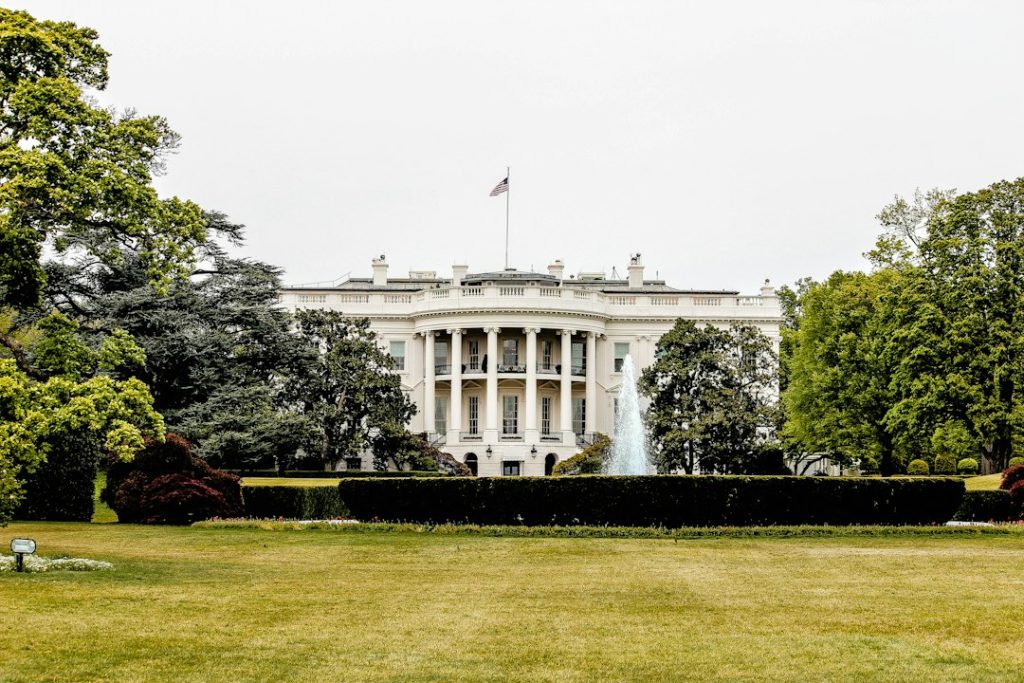
Speaking at a White House event on American leadership in artificial intelligence, President Donald Trump announced that the federal government would promote “super intelligence” as the standard label for advanced AI systems and urged companies to adopt the same wording. The Verge reported on October 11, 2026, that the phrase has already been written into internal White House communications guidance and that several federal agencies have begun substituting it in new documents. The push lands less than a month before the November 3 midterm elections, with AI policy a live campaign issue.
Silicon Valley did not start from zero. Meta formed Meta Superintelligence Labs in Ju
The discipline has renamed itself before. Artificial intelligence was coined at the 1956 Dartmouth workshop. Commercial vendors switched to expert systems in the 1980s. After the first funding winter in the 1990s, researchers adopted machine learning to avoid the skepticism of grant makers. Deep learning took over after AlexNet in 2012. ChatGPT made generative AI the default in 2022, and by 2025 the industry had settled on agentic AI. Each shift tracked a capital cycle: the old label lost its political and financial upside, the new one reopened budgets.
From a technical standpoint, super intelligence has no engineering definition. The working academic understanding is a system that exceeds humans across nearly all cognitive tasks. Systems in 2026 remain constrained by context limits, inference cost and hallucination rates, and evaluation still runs on benchmarks such as MMLU and SWE-bench. No standard exists for declaring that a model has crossed the superintelligence threshold. Writing a word with a blurred capability boundary into official documents costs regulators their grip. The EU AI Act assigns obligations by risk tier and by the category of general-purpose model; if US agencies pivot to super intelligence, transatlantic compliance language misaligns and companies must maintain a mapping between two vocabularies. Liu Gong argues that this is the point: once a term turns political, precision stops mattering and authority over definitions starts.
On the business side, the rename is first a procurement and narrative contest. Federal contracts, export control lists and state legislative hearings all use official vocabulary, and vendors copy that vocabulary into bids and earnings calls to stay eligible. Hyperscaler capital spending across Microsoft, Alphabet, Amazon and Meta runs into the hundreds of billions of dollars a year and is defended to boards in the language of a coming superintelligence. FactSet counted roughly 200 S&P 500 companies that mentioned AI on second-quarter 2025 earnings calls; almost none used super intelligence. That ratio can move quickly once the federal register sets the term. For the largest firms the shift is a cheap political gesture. For smaller vendors it is expensive: no brand premium to absorb the cost, plus a full rewrite of compliance documents to fund. Liu Gong expects industry alliances, standards working groups and government affairs teams branded around super intelligence within twelve months, while the real capability gap between frontier and mid-tier models stays roughly where it is.
For the industry at large, the hazard is a fractured vocabulary. Academic conferences, open-source communities and European regulators will most likely keep saying AI and general-purpose model, and neither Brussels nor Beijing will follow Washington’s wording. One technology then carries three names: super intelligence in Washington, general-purpose model in Brussels, model or weights among developers. Cross-border peer review, open-source licensing, model cards and safety assessments all become harder to reconcile. The closest analogy is the 2002 shift to climate change: the words moved, the emissions curve did not. Liu Gong’s test for whether this rebrand succeeds is not which word journalists use, but whether it shows up in procurement contracts, regulatory exemptions and export control text.
- Stanford HAI AI Index 2025: 78 percent of surveyed organizations used AI in at least one business function, up from 55 percent in 2023 — a 23-point gain showing the AI label has already completed market education.
- Google Trends order of magnitude: global search interest in AI has run more than 30 times higher than for superintelligence, indicating public vocabulary has not moved.
- FactSet: roughly 200 S&P 500 companies mentioned AI on second-quarter 2025 earnings calls, with almost none using superintelligence as a core term.
- Meta launched Meta Su
For the industry, the first three months will bring the most visible change in federal procurement documents, policy hearings and government affairs messaging: leading firms complete a low-cost wording switch while smaller vendors watch. Within a year, if the White House writes the term into an executive order or procurement standard, demand for compliance mapping will create new work for consultants and law firms, and friction with the EU AI Act vocabulary will grow. Dual-track compliance could become the default for multinationals.
For ordinary users,
Reactions split sharply. Among competitors, several model companies read the rename as a trade of wording for regulatory relief: the White House is simultaneously pushing federal preemption of state AI statutes, and companies that echo the language expect lighter compliance in return. Researchers and the safety community see it differently. Some AI safety scholars argue that super intelligence implies an uncontrollable system, deepening public fear rather than easing it and handing stricter legislation a rationale. Conferences such as NeurIPS and mainstr
Questions worth exploring:
- The politics of terminology: how naming, from climate change in 2002 to super intelligence today, rewrites regulatory boundaries and public expectations.
- The leverage of federal procurement language: how a word change in one document cascades into compliance costs for thousands of suppliers.
- Transatlantic vocabulary mismatch: how companies run dual-track compliance when Washington says super intelligence and Brussels says general-purpose model.
Further reading: 2026 Frontier LLM Comparison: A Practical Guide — a durable, evergreen reference. Bookmark it.
This item comes from The Verge AI (published 2026-10-11 18:33:56). Wenfeng Radar provides a Chinese/English summary and commentary on overseas AI developments; the original content is owned by its author.
Daily aggregation of overseas AI developments with in-depth analysis. Bookmark us to never miss an important signal; back to homepage.