
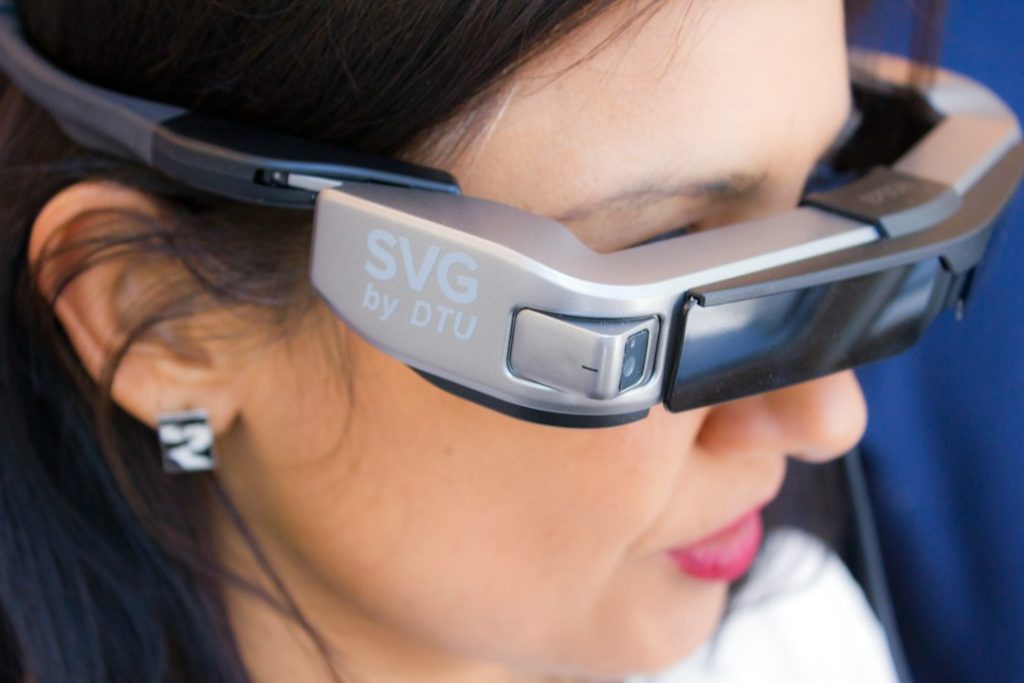
If 2025 was the year AI glasses stayed in the hands of early adopters, 2026 is the year the category went mainstream. The numbers tell the story: according to the Strategy Research Institute’s “2026 Global AI Glasses Strategic Insight Report,” global AI glasses shipments jumped from 340,000 units in 2023 to 8.7 million in 2025 — a 25-fold increase in three years — and are expected to exceed 10 million units in 2026. For context, TWS earbuds are projected to sell roughly 400 million units in 2026. AI glasses are still a fraction of that volume, but their growth rate now outpaces nearly every consumer electronics category.
Liu Gong’s take: this is the lens through which the market should be understood. We are in a window where the base is small, the growth is explosive, and the competitive landscape is far from settled. This article cuts through the spec sheets to lay out the market size, the competitive dynamics, the technology forks, and a practical buying framework for 2026.
Start with the market size. Forecasters disagree on the exact numbers but not on the direction. Omdia predicted in late 2025 that AI glasses shipments would exceed 10 million units in 2026 and reach 35 million by 2030, a 47% compound annual growth rate; it later updated that H1 2026 shipments hit a record 4.2 million units, more than doubling year over year, making 15 million for the full year a realistic target. IDC forecasts 13.6 million smart glasses shipments in 2026, up about 41%, with display-less smart glasses generating $5.1 billion in revenue and an 18.9% CAGR through 2030; a separate IDC figure puts the 2026 number as high as 23.7 million. Smart Analytics Global (SAG) is the most bullish: 2026 global AI smart glasses sales grow from 6 million units in 2025 to 20 million, with market size expanding from $1.2 billion to $5.6 billion — a 4x revenue jump. China is equally hot: Luotu Technology forecasts 3.2 million smart glasses sold domestically in 2026, up 120% year over year, while IDC data cited by Xinhua puts China at 4.5 million units, up 77%.
Discrepancies are normal — agencies draw category boundaries differently (display-less, AR, AI audio). What matters, in Liu Gong’s view, is the trend: 2026 is the year this category crosses from millions to tens of millions of units.
Now the competitive picture, which is the most interesting part. Meta is the overwhelming leader: IDC gives it 69.2% of the global smart glasses market in Q1 2026; Counterpoint counts roughly 7.4 million Meta units shipped in H1 2026, up 322% year over year, for an 85.2% share — and 94% of the display-less AI glasses segment specifically. A more visceral signal comes from the supply chain: EssilorLuxottica‘s Q2 2026 results show Ray-Ban Meta and Oakley Meta combined cumulative sales surpassing 7 million units, with AI smart glasses revenue nearly doubling year over year. For a product form introduced in 2023, 7 million units in about two years is exceptional by any consumer-electronics standard.
But the monopoly is being challenged. Samsung and Google unveiled their jointly developed smart glasses at Google I/O in May 2026, built with eyewear partners Gentle Monster and Warby Parker, running on Android XR with Gemini capabilities — navigation, photos, real-time translation. It is the Android camp’s most serious answer to Meta to date. Apple has still announced nothing, but Bloomberg’s Mark Gurman reported in April that Apple is testing four frame designs, with production targeted for December 2026 and a public launch in spring or summer 2027; Ming-Chi Kuo separately forecasts 3–5 million units shipped in 2027 at the earliest. Apple will almost certainly enter — just later than the market hoped.
Chinese brands deserve attention. Per IDC, four of the top five global smart glasses vendors in H1 2026 are Chinese — Xiaomi, RayNeo, XREAL, and Rokid, behind Meta. RayNeo ranks No.1 in AR glasses, and Rokid expects shipments to reach the million-unit level within the next two years. Chinese players are no longer followers; on the AR-display route, they are the main competitors differentiating against Meta.
The technology fork is the second layer that matters. Counterpoint data shows display-less products accounted for 96% of global AI glasses shipments in H1 2026. The best-selling AI glasses today are essentially eyewear that shoots photos, listens to you, and plays audio — the AI lives in the temples, not on the lenses. AR display glasses remain a small minority but are growing faster, with shipments up 136% year over year. Meta pushed further into daily use in March 2026 with its first prescription-optimized AI glasses (Ray-Ban Meta Blayzer Optics and Scriber Optics Gen 2), and at Meta Connect 2026 in September it unveiled the Connect 2026 lineup spanning multiple form factors and price points — bringing AI capture to entry-level products for the first time, with entry pricing down about 20% versus the prior generation and three times the number of product variants.
Liu Gong’s read: the clear technical trajectory is on-device AI models plus lightweight hardware as the industry default. Whether features like photography, translation, and voice assistants can run independently of the phone depends on chip-and-model co-optimization, not screen size. Over the past two years, on-device model capability has improved faster than hardware iteration, giving display-less AI glasses a decisive advantage in cost, weight, and battery — that is where the 96% comes from. As on-device models climb, the next battleground is interaction: Meta is already experimenting with Neural Handwriting and other new input methods to probe display-less interaction.
What should a normal buyer choose in 2026? Liu Gong offers a framework organized by need rather than brand.
If you want hands-free first-person capture and a voice assistant anywhere, display-less camera glasses are the most mature choice today. Ray-Ban Meta, after two generations, delivers complete photography, battery, and voice solutions across price tiers — the safe buy. Chinese alternatives (Xiaomi, Rokid, and others) are cheaper and vary in feature trade-offs, suited to budget-conscious buyers. If you want navigation or real-time translation rendered in front of your eyes, look at AR display glasses — RayNeo and XREAL lead here, but be prepared for weight and battery compromises. If you wear prescription lenses, prioritize models with native prescription support (Meta Gen 2 already has it); this decides whether the device becomes your everyday eyewear or a toy you occasionally pick up.
On price: in 2026, entry-level AI glasses have dropped into the ¥1,000 range in China (subsidies push the effective price even lower), with flagships above ¥3,000. Liu Gong’s advice is direct: if you are an early-adopter type, waiting until Apple enters in late 2026 and price competition intensifies will get you a better flagship deal; if you have a real need (capture, sports, translation), today’s display-less mature products already deliver a complete experience — no need to wait.
Finally, Liu Gong’s judgments on where this goes. First, 2026–2027 will be the open confrontation between the Android camp and Meta; Samsung and Google entering will accelerate market maturity and force Meta to iterate faster — good for consumers. Second, Apple’s lateness will not change the industry’s direction, but it will set the ceiling for premium experience, as it did with smartphones; once Apple ships, display-less AI glasses enter mainstream consumer narrative. Third, Chinese vendors’ opportunities sit on two rails — AR display via technology accumulation, and value-for-money via supply-chain cost advantages — but both face the same question: how to build differentiation against Meta’s ecosystem instead of spec-sheet wars. Fourth, the capability curve of on-device AI will decide the category’s final form; when on-device models can handle complex multimodal reasoning on the glasses themselves, the boundary between display-less and display will be redrawn — that is when the industry structure truly settles.
Questions worth thinking about
As AI glasses cross the ten-million-unit threshold, could privacy regulation (always-on cameras, always-on microphones) become the industry’s biggest external variable?
Will the division of compute between on-device AI and the cloud spawn a dedicated “glasses-native” app ecosystem, the way smartphones did?
If Apple ships in 2027, how long can Meta hold its 94% share of the display-less segment?
Sources
This analysis is based on public data compiled by Liu Gong. Primary sources: Strategy Research Institute “2026 Global AI Glasses Strategic Insight Report” (via The Paper and Shanghai Securities News), Omdia global AI glasses shipment forecasts (Business Wire, TMCnet), IDC Global Smart Glasses Market Quarterly Tracker, Counterpoint Research H1 2026 global AI glasses shipment statistics (via CNStock), EssilorLuxottica Q2 2026 earnings (Smart Wearables), Meta official press releases, Samsung Global Newsroom (Google I/O 2026), Bloomberg Mark Gurman reporting (via Wangdoo, Fello AI), Xinhua, CLS, 36Kr, 21st Century Business Herald. All figures per the original sources; this site provides commentary and perspective only.