

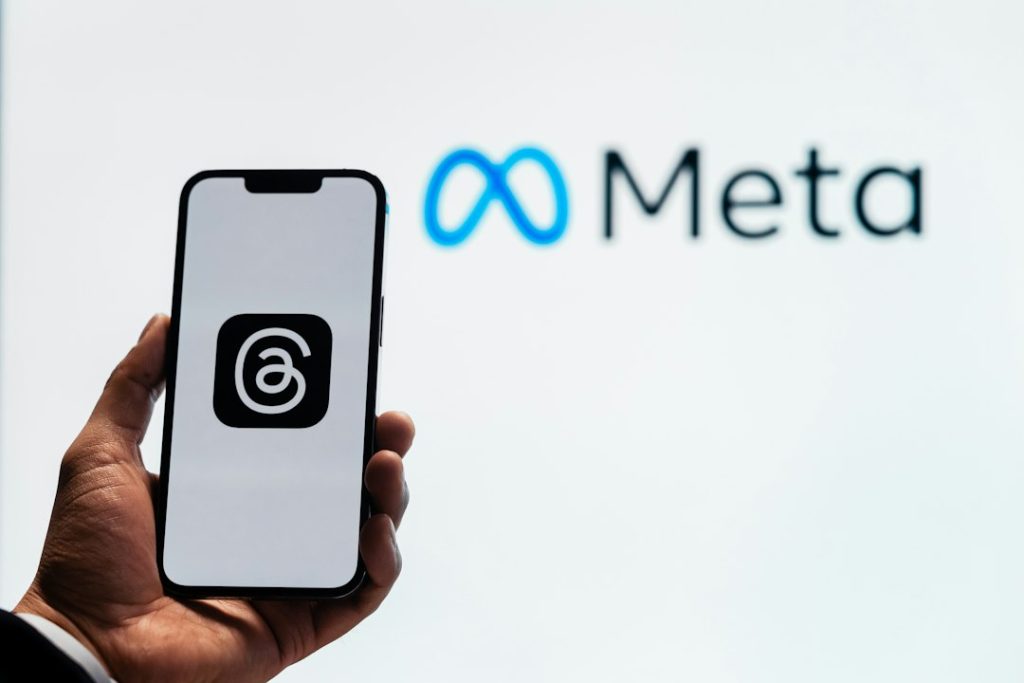
Meta revised its business terms in October 2026, removing language that could be read as permission to train AI models freely on news sites, while keeping the phrase 'associated with your products or services.' Legal experts interviewed by The Verge on 22 October said the edit leaves the operative license untouched and does not amount to a substantive response to publishers' concerns. The dispute over wording exposes the current state of AI training-data governance: platforms prefer drafting
The sequence is short. On 22 October 2026, The Verge reported that Meta had updated the text of its business terms, deleting wording that could be read as allowing the company to train AI models freely on news sites; the removed passage had pointed directly at third-party sources such as news publishers.
One sentence survived intact: Meta may use content and information 'associated with your products or services.' The legal experts quoted argue that this is the phrase doing the real work — if a platform characterises a body of web pages as associated with the service it offers, crawling can be framed as contractually permitted. What was removed was descriptive language; what remains is the grant of rights. The report does not say whether Meta responded to the objections point by point, nor does it give an effective date or scope for the change. Publicly, the revision touches business
The dispute sits on three years of argument over AI training corpora. The New York Times sued OpenAI and Microsoft in December 2023; Reddit struck a content deal with Google in February 2024; News Corp signed with OpenAI in May 2024; and through the same period a growing share of news sites began blocking AI crawlers in robots.txt. In 2025 Meta acknowledged that its models were trained on public content including public posts from adult users, turning 'on what legal basis does a platform take third-party text' from an engineering question into a contract question.
Regulators tightened in parallel. Transparency duties for general-purpose AI models under the EU AI Act took effect on 2 August
Liu Gong's take: this is a drafting exercise, not a licensing reset, and within nine months a publisher is likely to bring a claim built on the clause text itself rather than on any single crawl. Removing descriptive language while leaving the 'associated with your products or services' grant intact changes how the arrangement reads, not what it permits.
From a technical standpoint, crawler access is governed by robots.txt, user-agent blocking and IP reputation long before any contract is consulted. A platform that wants news text for pretraining does not need a clause to fetch a page; the clause matters afterwards, as a defence. That asymmetry explains why the edit is cheap and why it satisfies nobody: a publisher can block a bot in an afternoon but cannot block a contractual argument. A 2024 public scan of leading news sites found roughly half had blocked OpenAI's GPTBot, yet blocking rates vary widely by crawler and say nothing about the strength of the clause.
On the business side, news is being repriced downward just as legal exposure rises. Reddit's deal with Google was reported at about $60 million a year and News Corp's agreement with OpenAI at roughly $250 million over five years — large in isolation, rounding errors against Meta's 2025 capital expenditure guidance of $60–72 billion. When a corpus costs well under a tenth of a percent of the budget and litigation outcomes are uncertain, redrafting beats writing cheques.
For the industry, disclosure rules raise the cost of ambiguity without resolving it. Europe's general-purpose AI obligations took effect in August 2025 and require a training-data summary, but a summary is not a per-site licence. In industrial inspection, where Liu Gong works, every defect image carries a work order, a line number and a timestamp, so provenance is settled at the moment the data is created; web corpora have no such chain of custody, which is why the argument keeps returning to contract wording rather than to data records — and why publishers will shift their attack from how much was crawled to the basis on which it was crawled.
- Llama 4 was trained on multimodal data in the range of 40 trillion tokens; Meta has not disclosed the share attributable to news sites.
- A 2024 public scan of leading news sites found roughly half had blocked OpenAI's GPTBot, while blocking rates for Meta's crawlers were markedly lower on the same lists.
- Published licensing benchmarks: Reddit–Google at about $60 million a year, News Corp–OpenAI at about $250 million over five years.
- Against Meta's 2025 capital expenditure guidance of $60–72 billion, a single corpus licence is well under a tenth of a percent of spend.
- EU general-purpose AI transparency duties took effect on 2 August 2025 and the US Copyright Office training report
For the industry, within three months the revision will not change crawling behaviour, but it gives publishers fresh evidence in negotiations and litigation: the platform accepted that the old wording was a problem yet removed the description rather than the grant. Over twelve months, more platforms are likely to copy the pattern, shifting compliance cost from licence fees to legal drafting, while publishers' leverage keeps depending on courts rather than contracts.
For ordinary users, the short-term effect is close to nil: news summaries, AI answers and social feeds will not change because a clause was reworded. Over a year, tighter blocking and competition-law claims could fragment
Questions worth exploring:
- How copyright claims rebuild an evidentiary chain once contract wording and crawler behaviour are separated
- Whether news text has already been diluted as pretraining value by synthetic and multimodal data
- Whether the granularity of EU training-data summaries can become a de facto starting point for licensing talks
Further reading: 2026 Frontier LLM Comparison: A Practical Guide — a durable, evergreen reference. Bookmark it.
This item comes from The Verge AI (published 2026-10-22 20:32:05). Wenfeng Radar provides a Chinese/English summary and commentary on overseas AI developments; the original content is owned by its author.
Daily aggregation of overseas AI developments with in-depth analysis. Bookmark us to never miss an important signal; back to homepage.