

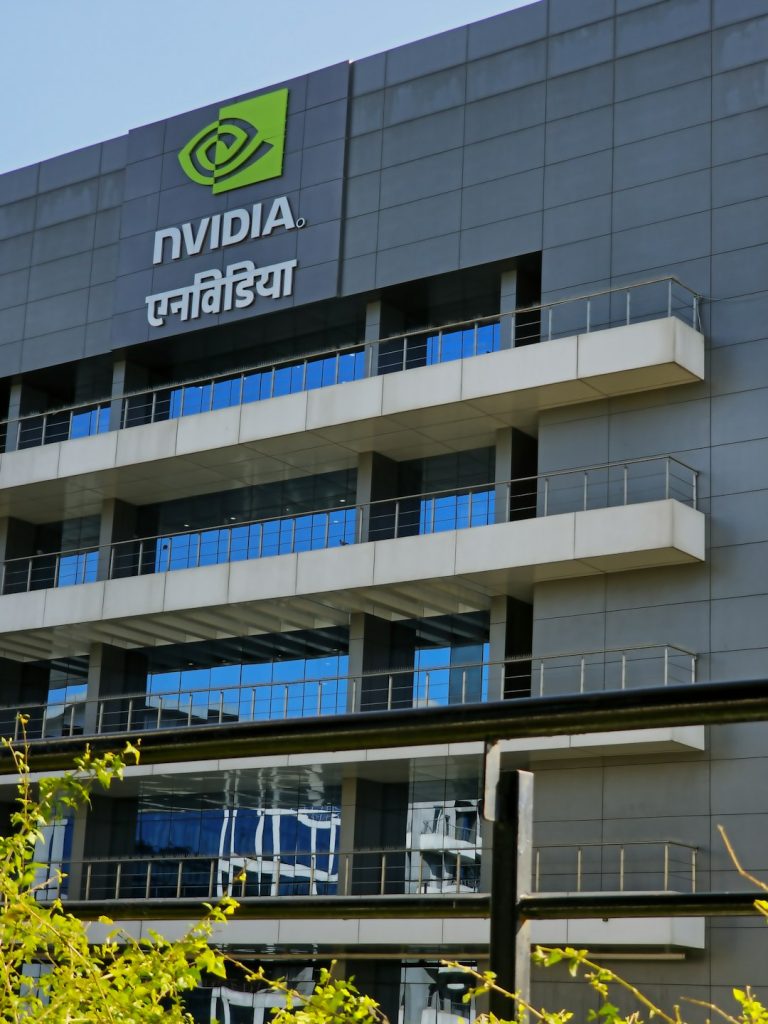
Nvidia's board said early on November 12 that it had accepted the resignation of co-founder, president and CEO Jensen Huang, effective immediately, after two extramarital relationships were reported — one with a woman described by U.S. media as linked to Chinese intelligence, the other with an Nvidia executive who reported directly to him. The company, whose market value passed $4 trillion in 2025 and which supplies an estimated 80–90% of AI training accelerators, now enters a leadership vacuum
According to the board statement obtained by The Verge AI, the timeline ran as follows. On the evening of Wednesday, November 11, Nvidia's board convened an emergency full session at its headquarters that ran past midnight; afterward it announced it had accepted Huang's resignation as CEO, president and director, effective immediately, and said transition arrangements would be disclosed within days without naming an interim leader. The trigger was a pair of reports that surfaced the previous week. The first concerned a long-running relationship with a woman identified by several U.S. outlets as linked to Chinese intelligence services. The second concerned a female Nvidia executive who reported directly to Huang and who has been suspended pending an internal investigation. The board said it had retained an outside law firm to lead an independent review and had notified the U.S. Bureau of
Why now: since 2022 Nvidia has effectively operated as the toll booth of AI compute, with its market value climbing from roughly $300 billion at the end of 2022 to more than $4 trillion at one point in 2025. Huang's leather jacket and GTC keynote had become part of the corporate narrative, binding the founder tightly to the product roadmap. The policy backdrop matters just as much. U.S. export controls on AI chips to China have tightened in successive rounds since October 2022, and Nvidia's China revenue including Hong Kong has fallen from about 21% of the total in fiscal 2023 to roughly 13% in the most recent publicly reported year, so any China-adjacent personal relationship converts a
Liu Gong's take: within the next six months Nvidia will most likely install an interim chief from its own ranks — the CFO or a senior operations executive — rather than recruit an outsider, and will present a formal succession plan before GTC 2027; the product roadmap will not shift because of this resignation, but the market will finish repricing the founder premium within two quarters.
From a technical standpoint, Nvidia's real moat is not a person but the CUDA and TensorRT software stack that developers worldwide have spent years adapting to. Over the past decade, per-generation GPU compute gains have typically landed between 1.5x and 2x, while porting a training framework onto a non-CUDA platform still costs manpower measured in person-months, and that stickiness does not evaporate when a CEO leaves. Liu Gong sees this more directly in industrial visual inspection deployments: when a line-side defect model has to run on an edge box, accuracy and frame rate always occupy the top two slots on a customer's scorecard, but once competing options are close on those two, the deal usually turns on whether the stack will still be maintained three years out. As of November 2026, that question has lost its certain answer for the first time.
On the business side, the real exposure is not order volume but contract terms. Hyperscaler purchase agreements roll quarterly and carry capacity reservations and priority-supply clauses, which is precisely the second-source window through which AMD's MI line and in-house ASICs have been gaining share. Public filings show Nvidia's data-center gross margin consistently above 70% against roughly 50% for AMD's comparable Instinct business; that 20-point gap comes from system-level delivery and software, and it will not narrow because of a personnel change — yet carving 10% to 20% of share to a second supplier during the 2027 procurement cycle is an entirely rational move for buyers.
The most sensitive dimension is policy. A relationship with someone described as linked to Chinese intelligence will not be handled in Washington as a matter of personal conduct but as an export-control and counterintelligence matter. Nvidia's China revenue including Hong Kong was about 13% of the total in its most recent reported year, and any delay in license review flows straight into next-quarter guidance. Liu Gong predicts that within one quarter BIS will most likely open an additional review of Nvidia's existing China shipment licenses — a thread more worth tracking than the identity of the next CEO.
- Huang co-founded Nvidia in 1993 with Chris Malachowsky and Curtis Priem and served 33 years as CEO; the market value rose from roughly $300 billion at the end of 2022 to more than $4 trillion at one point in 2025, tying the founder closely to the valuation curve.
- In the most recent publicly reported fiscal year, China including Hong Kong accounted for about 13% of Nvidia revenue, down from about 21% in fiscal 2023, so every licensing review lands directly on guidance.
- Nvidia's data-center gross margin has stayed above 70%, versus roughly 50% for AMD's comparable Instinct business; the 20-point spread rests on CUDA and system-level delivery, not on one manager.
- Third-party estimates
For the industry, the three-month impact concentrates on supply-chain confidence: TSMC CoWoS capacity reservations, quarterly hyperscaler orders and OEM system build schedules could see one to two weeks of hesitation, though not outright cancellations. Over twelve months the real shift is in customer structure — the odds rise that leading cloud buyers hand 10%–20% of accelerator purchases to AMD or in-house ASICs, and Nvidia's 80%–90% share most likely settles in the low 70s. For ordinary users, the near-term effect is close to nil: GeForce launch cadence and driver support are decided by the product-line teams, not the CEO's office. The twelve-month effect is more likely to show up in
Questions worth exploring:
- How founder key-person risk gets written into valuation models: whether the board publishes a succession plan decides if this is a few quarters of volatility or a durable discount.
- How national-security concerns intrude on corporate governance: why one executive's private relationship can trigger an export-license review, and where that boundary should sit.
- The dual-sourcing strategy: how long a window AMD and in-house ASICs actually have to take share, with software migration cost as the single decisive variable.
Further reading: 2026 Frontier LLM Comparison: A Practical Guide — a durable, evergreen reference. Bookmark it.
This item comes from The Verge AI (published 2026-11-12 13:53:16). Wenfeng Radar provides a Chinese/English summary and commentary on overseas AI developments; the original content is owned by its author.
Daily aggregation of overseas AI developments with in-depth analysis. Bookmark us to never miss an important signal; back to homepage.