

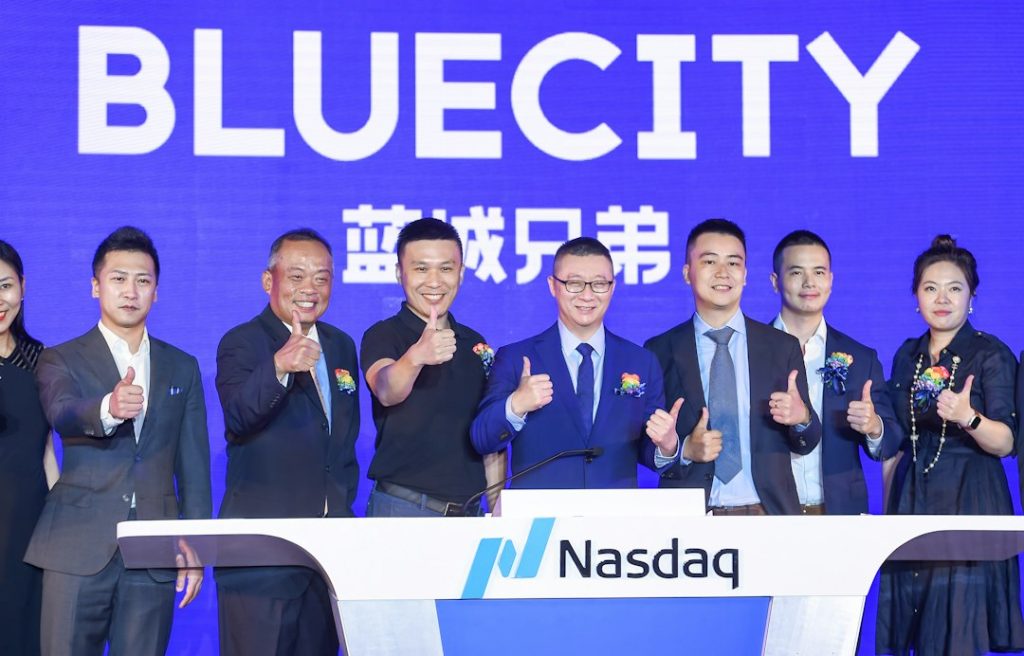
On October 29, 2026, Anthropic filed its S-1 with the U.S. Securities and Exchange Commission to list on Nasdaq under the ticker ANTH, targeting a raise of roughly $15 billion at a valuation of $35 billion to $40 billion. It is the first company built purely around frontier models to reach public markets, and the filing is also the first to disclose, under GAAP, the losses and compute obligations behind a $14 billion annualized revenue run-rate. The central conclusion here is that the document
Anthropic filed its S-1 with the U.S. Securities and Exchange Commission on October 29, 2026, setting out plans to list on Nasdaq under the ticker ANTH, with Goldman Sachs, Morgan Stanley and JPMorgan leading a syndicate targeting a raise of about $15 billion at a valuation between $350 billion and $400 billion. At the top of that range it would be the largest IPO of 2026. The document reports full-year 2025 revenue of $4.6 billion against a net loss of $5.3 billion, first-half 2026 revenue of $6.1 billion, and an annualized revenue run-rate of $14 billion as of August 2026. Enterprise API and cloud marketplace channels account for 78 percent of revenue, consumer subscriptions for 12 percent, and the coding tool Claude Code alone carries a $2.5 billion annualized run-rate. Gross margin rose from 38 percent in 2025 to 51 percent in the first half of 2026. The filing also discloses
Three pressures converged to produce this filing. The first is private-market capacity. Anthropic closed a $13 billion Series F at a $183 billion valuation in September 2025, but each subsequent round has drawn a thinner marginal investor base while training clusters have doubled in cost year over year, leaving private capital unable to keep pace. The second is an open listing window: CoreWeave, Figma and other technology issuers that went public in 2025 gave investors comparable anchors for high-growth, high-loss AI assets. The third is competitive timing. OpenAI has completed its public benefit restructuring and is preparing its own listing, while Google bundles Gemini into its own cloud
Liu Gong's take: what Anthropic is selling in this S-1 is not a model but an option collateralized against 2028 cash flow, and public markets will hold that option for only about four quarters.
From a technical standpoint, the margin move from 38 percent to 51 percent did not come from pricing. It came from inference-side engineering, with cost per token on successive Claude generations roughly halving every two quarters. That is the same curve visible in industrial inspection, where cost per inference for vision models fell from about 0.8 cents in 2024 to roughly 0.2 cents in 2026. In the production-line projects Liu Gong works on, the moment a customer signs is never a benchmark score; it is the point where cost per inference drops below the cost of a human re-check. An enterprise API share of 78 percent suggests Anthropic is already on the right side of that curve. Yet 51 percent gross margin is a dangerous number for a software company, roughly 25 percentage points below what mature SaaS reports. It means about 49 cents of every revenue dollar goes back to compute, and the larger the business grows, the deeper its dependence on chip suppliers and cloud providers at renewal time.
On the business side, the $70 billion five-year compute commitment is the sharpest page in the document. It turns a $400 billion company into a long-term tenant of two cloud providers, and it translates the philosophical question of when AGI arrives into an accounting question about depreciation schedules. Liu Gong predicts that within the next six months, most likely in its first quarterly report as a public company, Anthropic will shift its gross-margin disclosure to move compute purchases from operating cost into capital expenditure and reframe the story around adjusted EBITDA. Once that happens, sell-side anchors migrate from price-to-sales to EV/EBITDA, and the repricing that follows will be more violent than the IPO pop itself. The comparable is instructive: CoreWeave, similarly asset-heavy and similarly dependent on a single upstream supplier, drew down more than 30 percent around its lockup expiry in 2025. Anthropic's lockup window most likely lands in April 2027.
For the industry, the real variable is whether public markets can price a frontier lab at all. Private capital has spent three years pushing this cycle forward with SAFEs and convertible notes; the S-1 is the first document that has to explain losses under GAAP. Writing the possible emergence of AGI into the risk factors welds technical uncertainty directly into the valuation model, which has no precedent in U.S. equity markets. Liu Gong believes that if Anthropic trades below its offer price within three months of listing, model companies queuing for 2027 listings will defer en masse, and the valuation reference for Chinese AI infrastructure firms in Hong Kong and on the STAR Market will be reset downward with them. If instead it closes its first day up more than 30 percent, a wave of AI filings should arrive in the first half of 2027.
- Annualized revenue run-rate: $14 billion in August 2026, versus $4.6 billion for full-year 2025, roughly a 3x expansion in a year
- Gross margin: 38 percent in 2025 rising to 51 percent in the first half of 2026, still about 25 percentage points below the 75-80 percent typical of mature SaaS
- Revenue mix: 78 percent enterprise API and cloud marketplace, 12 percent consumer subscriptions, with Claude Code alone at a $2.5 billion annualized run-rate
- Compute commitments: roughly $70 billion to AWS and Google Cloud over five years, about 5x the 2026 annualized revenue base
- Headcount efficiency: about 2,500 employees against a $14 billion run-rate, or roughly $5.6 million of annualized
For the industry, the near-term effect over three months is the arrival of a pricing anchor. Private markets previously had only the $183 billion Series F to work from; the S-1 supplies comparable schedules for revenue, gross margin and compute commitments, and every model company now raising will be re-underwritten against them, producing immediate valuation dispersion. Over twelve months, if Anthropic proves in its first annual report that 51 percent gross margin can keep climbing, the enterprise API market enters a price war fought over inference cost, with open-weight models and self-hosted clusters becoming negotiating leverage for buyers. If margin stalls, the sector shifts from
Sell-side opinion splits on gross margin rather than growth. The bullish camp, led by the underwriting banks' research desks, argues that 51 percent margin alongside 78 percent enterprise revenue shows Anthropic has moved past the research-lab stage into a durable software business. The cautious camp points to the $70 billion compute commitment as effectively a mortgage on five years of free cash flow. Rivals have stayed restrained: both OpenAI and xAI have emphasized consumer distribution and owned compute in recent investor materials rather than engaging on revenue comparisons. Developer discussion has centered on the API terms disclosed in the filing, including volume discount thresholds
Questions worth exploring:
- How the $70 billion compute commitment turns a frontier lab into a long-term tenant of two cloud providers
- Whether a public benefit corporation with dual-class shares can withstand quarterly earnings pressure
- How fragile a revenue base that is 78 percent enterprise API is when open-weight models cut prices
Further reading: 2026 Frontier LLM Comparison: A Practical Guide — a durable, evergreen reference. Bookmark it.
This item comes from The Verge AI (published 2026-10-29 14:00:00). Wenfeng Radar provides a Chinese/English summary and commentary on overseas AI developments; the original content is owned by its author.
Daily aggregation of overseas AI developments with in-depth analysis. Bookmark us to never miss an important signal; back to homepage.