

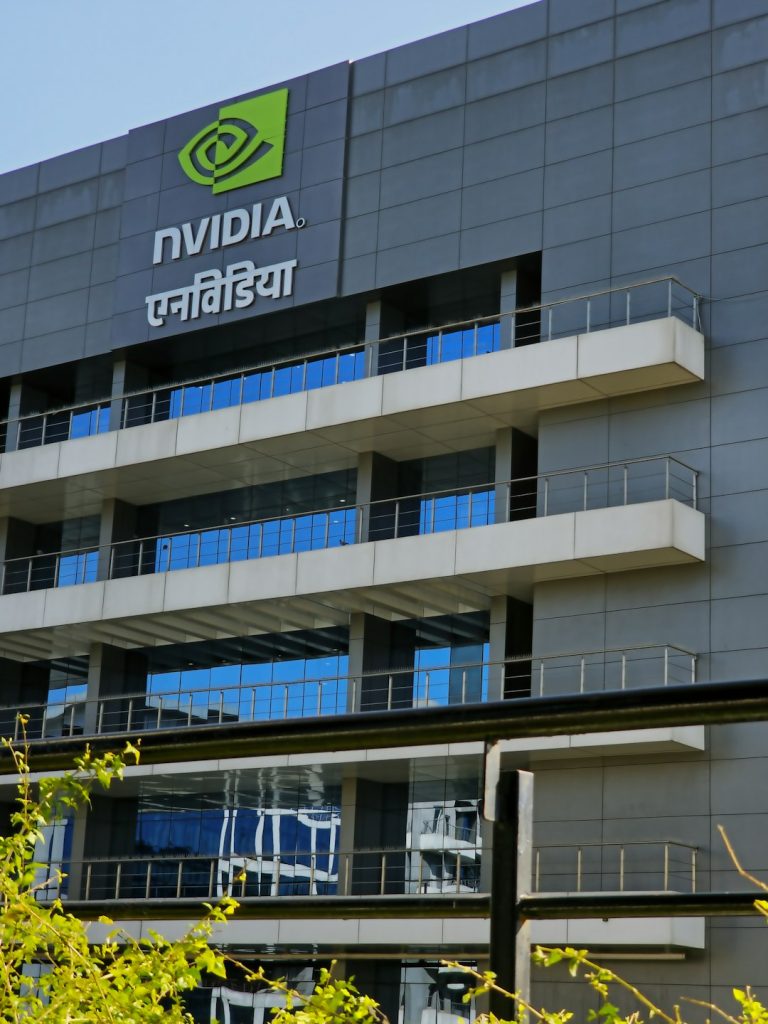
Nvidia has stopped shipping advanced AI chips to China even though the White House granted it a conditional export licence in December 2025. Interim CEO Colette Kress confirmed the halt on the 17 November earnings call; China including Hong Kong generated roughly 17.1 billion dollars, or 13 percent of company revenue, in FY2025. The significance is that this is not a quarterly pacing decision but the formal confirmation of a two-stack AI compute world, in which the US-designs, China-deploys
The timeline is unusually clean. In December 2025 the White House granted Nvidia a conditional licence to resume exports of advanced AI accelerators to China, ending a tightening regime that had run since October 2022 and leading the market to expect H200-class parts back in Chinese data centres during the first half of 2026. The licence carried volume caps and a revenue-share condition; earlier public reporting indicated Nvidia agreed to remit a percentage of certain China sales in exchange. On Tuesday 17 November 2026, during the quarterly earnings call, interim CEO Colette Kress confirmed the company is no longer sending advanced AI chips to China. Kress, long Nvidia's chief financial officer, took operational control after former CEO Jensen Huang stepped down; she did not disclose which condition triggered the halt and gave no quarterly China revenue figure, saying only that the
To understand why the halt came almost a year after the licence, go back through three rounds of controls. A100 and H100 were restricted in October 2022, and Nvidia responded with down-spec A800 and H800 parts. The rules tightened again in October 2023 and covered those parts too. Through 2024 and 2025, the China-specific H20 was pulled into the licensing regime in April 2025, and the company disclosed roughly 5.5 billion dollars in inventory and purchase-commitment losses for the period. That gap of more than two years coincided exactly with Chinese training silicon moving from usable to shippable at volume: Ascend 910C, Cambricon思元 590 and 690, and Hygon DCU were deployed across
Liu Gong believes this is not a sales-timing adjustment but a structural exit from China's AI training chip market. Within the next six months, Nvidia will most likely plan no China-specific SKU for 2027 at all, and the CoWoS packaging allocation previously reserved for China parts will be reassigned wholesale to GB300 orders in North America and the Middle East. The licence remains on paper; the capacity has already left.
From a technical standpoint, the question was never whether specs could be cut, but how much usability survives the cut. The H20 delivers about 296 TFLOPS of dense FP8, roughly 15 percent of the H100's 1,979 TFLOPS, yet its HBM3 bandwidth of 4.0 TB/s is about 19 percent higher than the H100's 3.35 TB/s. That parameter pair reveals the design logic: keep bandwidth, cut compute. It works for single-node inference and memory-bound small models, and it fails completely for training clusters that need long, large-scale All-Reduce. Compute density falls short, node counts multiply, and interconnect plus power costs explode accordingly. Even with the licence in hand, H20-class parts had already fallen out of the procurement lists of China's leading cloud providers. CUDA's real moat is ecosystem, not peak throughput, but an ecosystem only persists if hardware keeps running in racks. Two years without new cards arriving shifts the centre of gravity in operator libraries, compilers and framework adaptation, and once that shift completes, the cost of returning is far higher than any price concession.
On the business side, the 13 percent revenue gap is fillable; what is being lost is something else. With Blackwell sold out worldwide, the 17.1 billion dollars that China including Hong Kong contributed in FY2025 can be absorbed within a year by North American, Middle Eastern sovereign AI and European orders, and the reported numbers may even look better. What is irreversible is the customer relationship and the service organisation. When a regional team degrades from delivery to support, rebuilding the full chain from pre-sales to field operations three years later costs far more than the loss booked today. More important is the loss of the default option. Once a model generation has been pretrained, fine-tuned and served entirely on a domestic software stack, the next procurement no longer requires justification; selection degenerates into path continuation.
For the industry, this turns the two-stack world from forecast into fact. Model weights, operator implementations and parallel strategies all fork by hardware, open-source projects end up maintaining a CUDA line and a domestic line, and smaller developers are forced to pick a side. The adaptation cost of cross-border collaboration is widely underestimated. From Liu Gong's vantage point in industrial quality inspection, the compute demand in that scenario is concentrated on inference, where one or two cards per production line usually suffice. The real barrier is software-stack stability and a five-year supply commitment, not peak throughput. Substitution there will run much faster than in training clusters, which means domestic accelerator installed bases will scale first on the inference side and erode the training side afterwards. Installed base comes first; ecosystem follows.
- China including Hong Kong revenue was about 17.1 billion dollars in FY2025, 13 percent of Nvidia's total; the same measure was 7.1 billion dollars and 26.4 percent in FY2022, so the share has roughly halved in four years.
- The H20 delivers about 296 TFLOPS dense FP8, only 15 percent of the H100's roughly 1,979 TFLOPS, while its 4.0 TB/s HBM3 bandwidth is about 19 percent above the H100's 3.35 TB/s; the keep-bandwidth-cut-compute approach does not hold up in training clusters.
- After the H20 was pulled into licensing in April 2025, Nvidia disclosed roughly 5.5 billion dollars in inventory and purchase-commitment losses, with about 4.5 billion dollars charged in that quarter, its largest
For the industry, the near term of three months brings a wholesale shift of Chinese training-cluster procurement toward domestic parts and reallocation of installed capacity, rising prices in secondary and grey channels, and Nvidia guidance that no longer contains a China variable. AMD and Intel licence applications become the next watch point; if they are approved but not shipped, the two-stack structure locks in. Over twelve months, forked frameworks, operator libraries and parallel strategies harden into two engineering standards, open-source models double their maintenance lines, migration costs hit smaller developers all at once, and global compute rental pricing splits
Reactions split cleanly. Among competitors, AMD has not commented publicly on Nvidia's decision and its MI-series China licences remain in review; the prevailing industry view is that even if approved, allowable specs and volumes will not exceed what Nvidia previously obtained. Huawei and domestic accelerator vendors treat the gap as a certainty window, with Ascend's win rate in telecom intelligent-computing and local government compute platforms rising through 2025. Analysts divide into two camps: one argues the 13 percent China revenue can be fully absorbed inside the Blackwell cycle, making the exit a net positive; the other stresses that ecosystem damage appears with a lag, and that if
Questions worth exploring:
- Why the White House licence became a dead letter: the arithmetic between conditional-licence compliance costs and corporate opportunity cost
- The CUDA tipping point in China: how long without new cards before operator libraries and framework adaptation actually shift
- The hidden cost of a two-stack world: what forked model weights, operator implementations and maintenance lines really cost smaller developers
Further reading: 2026 Frontier LLM Comparison: A Practical Guide — a durable, evergreen reference. Bookmark it.
This item comes from The Verge AI (published 2026-11-18 13:01:05). Wenfeng Radar provides a Chinese/English summary and commentary on overseas AI developments; the original content is owned by its author.
Daily aggregation of overseas AI developments with in-depth analysis. Bookmark us to never miss an important signal; back to homepage.